The Real Science of Success: IQ vs. Emotional Intelligence
Since the beginning of history, we have tried to figure out what makes a person successful. Is it raw brainpower (IQ)? Or is it the ability to get along with people (Emotional Intelligence)?
Since the beginning of history, we have tried to figure out what makes a person successful. Is it raw brainpower (IQ)? Or is it the ability to get along with people (Emotional Intelligence)?
For years, popular psychology has told us that “EQ matters more than IQ.” It is a comforting idea—it suggests that if you are nice and socially aware, you can outperform a genius. But when we look at the hard data—specifically large-scale studies rather than small surveys—the story changes.

1. Defining the Basics
To understand the research, we first need to define what we are measuring.
- Cognitive Intelligence (IQ): Think of this as the “horsepower” of your brain. It is your ability to learn, reason, and solve new problems quickly.
- Emotional Intelligence (EI): This is your ability to handle emotions. It generally breaks down into four skills: noticing emotions, using emotions to think, understanding emotions, and managing them.
2. The Workplace: What the Data Actually Says
You will often find small studies claiming EI is the secret to success. However, these studies often make a statistical mistake: they don’t “control” for other factors. They forget that smart people often have high EI, and hardworking people also have high EI. When you separate these factors, the “magic” of EI often disappears.
Here is what happens when we look at the big numbers:
The Adam Grant Sales Study
Adam Grant, a top organizational psychologist from Wharton, conducted a study with Optimize Hire on hundreds of salespeople. Sales is a job where you would expect “people skills” to rule. The results were shocking:
- Cognitive ability (IQ) was 5 times more powerful at predicting sales revenue than Emotional Intelligence.
- The Income Gap: The study found massive differences in annual revenue based on brainpower:
- High Cognitive Ability: $195,000
- Moderate Cognitive Ability: $159,000
- Low Cognitive Ability: $109,000
The “Added Value” Problem (Joseph & Newman, 2010)
Researchers Dana Joseph and Dan Newman looked at thousands of employees to see if EI added any value after you already knew a person’s IQ and personality.
- Cognitive Ability predicted roughly 14% of job performance variance on its own.
- Emotional Intelligence predicted less than 1% of performance once you controlled for IQ and personality.
The Lesson: Being smart (IQ) and hardworking (Conscientiousness) is what drives performance. EI is helpful, but it is not the main driver.
3. School and Grades: The “Competition Effect”
There is a famous trend in psychology regarding how well IQ predicts grades. This data, popularized by psychometrician Arthur Jensen (1980), shows a clear decay:
- Primary School: Connection is Strong (Correlation ~0.60 to 0.70).
- High School: Connection is Moderate (Correlation ~0.50).
- College: Connection is Weaker (Correlation ~0.40).
Does this mean IQ matters less in college? No. It means the competition has gotten tougher. This is a concept called Range Restriction.
Think of it like the NBA. In high school basketball, being tall is a huge advantage. But in the NBA, everyone is tall. So, height doesn’t predict success as well in the NBA—not because height doesn’t matter, but because you have to be tall just to get in the room.
The same happens in education. By the time you get to a good university, the students with lower IQs have mostly dropped out. Everyone left is smart. That is why hard work (studying) becomes the deciding factor in college.
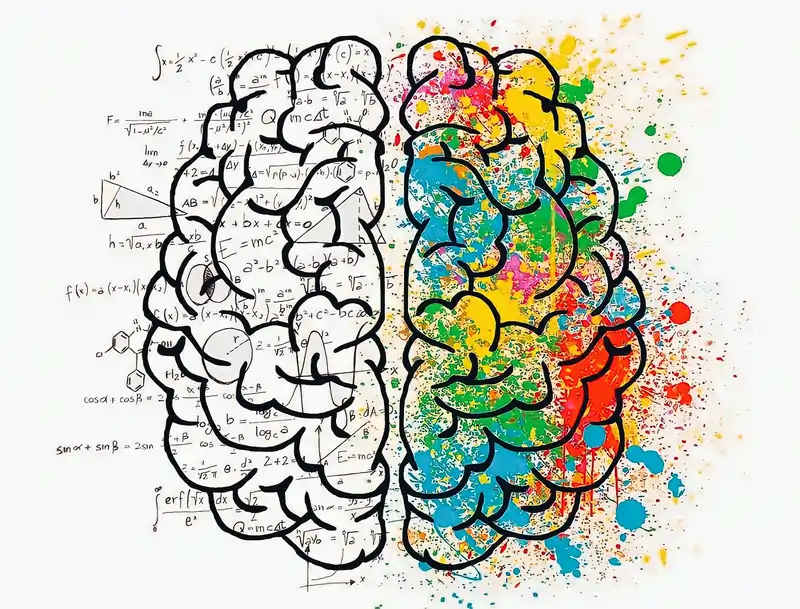
4. Reflections: Why We Need Both
As a researcher, I have to be honest: the data heavily favors IQ as the best predictor of learning a job. If I had to bet on who would learn a complex task faster, I would bet on the person with the higher IQ every time.
However, statistics tell us about groups, not individuals. While IQ sets your “ceiling” (how complex a problem you can solve), Emotional Intelligence often sets your “floor.” It stops you from burning out, offending your boss, or quitting when things get tough.
Conclusion
The relationship between intelligence and success is real and powerful.
- In Business: Speed of thought (IQ) is the biggest driver of income and performance, even in sales.
- In School: Intelligence gets you to the next level, but once you are there, hard work distinguishes the best from the rest.
References
- Grant, A. (2014). “Emotional Intelligence is Overrated.” Read the Article (LinkedIn)
- Joseph, D. L., & Newman, D. A. (2010). “Emotional intelligence: An integrative meta-analysis and cascading model.” Journal of Applied Psychology. Read the Abstract (APA PsycNet)
- Jensen, A. R. (1980). “Bias in Mental Testing.” (New York: Free Press). This book established the decay of correlations from .70 (Primary) to .40 (College) due to range restriction. View Book Reference (Google Books)